
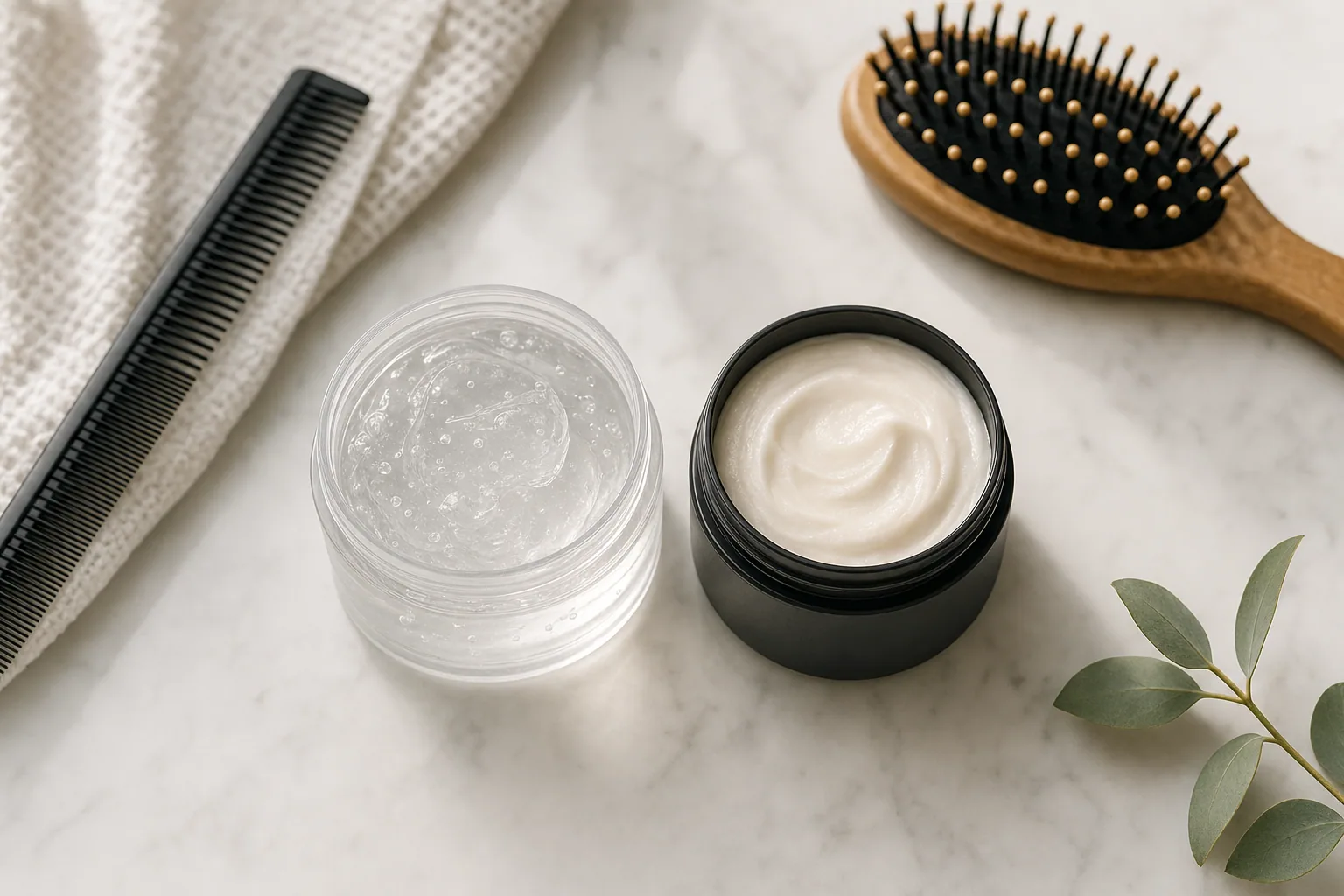
Choosing between hair gel and hair wax feels simple until you are standing in front of a shelf full of options with no idea which one will actually work for your hair type and style goals. Both products hold your hair in place, but they do it in very different ways and leave behind very different finishes. Knowing those differences saves you from bad hair days and wasted money.
What Hair Gel Actually Does
Gel is a water-based product with a fairly high water content, which gives it that slippery, almost liquid consistency straight out of the tube or bottle. When you apply it to damp or dry hair, it coats each strand and then dries down to form a firm, sometimes crunchy hold. The result is a defined, polished look that stays put for hours.
Gel works especially well for:
- Defining curls without frizz
- Sleek, combed-back styles
- Wet-look finishes
- Styles that need maximum hold through wind and humidity
The downside is the potential for stiffness. Heavy gels can make hair feel rigid and flaky if you use too much. Lighter formulas avoid this. For example, a soft-hold styler like the DevaCurl Light Defining Gel is designed specifically to define and control without leaving a crunchy residue, which makes it a smart pick for curly or wavy textures.
Gel also washes out easily because it is water-based, so cleanup is never a struggle.
What Hair Wax Actually Does
Wax is an oil or petroleum-based product with a thicker, more pliable consistency. It does not dry hard the way gel does. Instead it stays workable, meaning you can run your fingers through your hair and reshape it throughout the day. The finish is typically matte or low-sheen rather than glossy, though this depends on the specific formula.
Wax works especially well for:
- Textured, piece-y looks
- Short to medium styles that need separation
- Natural, lived-in finishes
- Styles you want to rework or adjust later
A dry wax, like the Davines strong dry wax for defined matte textures, takes this further by adding grip and separation without any shine at all, which suits short haircuts and tousled styles beautifully.
The trade-off with wax is that it can be harder to remove. Oil-based formulas sometimes need two shampoo washes to fully clear out, and buildup over time can weigh hair down if you skip thorough cleansing.
Gel vs Wax: A Side-by-Side Look
| Feature | Hair Gel | Hair Wax |
|---|---|---|
| Finish | Shiny or glossy | Matte or low-sheen |
| Hold type | Firm and structured | Flexible and reworkable |
| Best hair types | Curly, wavy, thick | Short, fine, textured |
| Washability | Easy, water-based | Requires thorough washing |
| Ideal styles | Slicked-back, defined curls | Textured, natural, piece-y |
How to Choose Based on Your Hair Type
Your hair type is the single biggest factor in this decision.
Curly or wavy hair almost always performs better with gel. The firm hold locks curl patterns in place and reduces frizz. Look for formulas that say 'no crunch' or 'soft hold' if you want movement rather than rigidity.
Short, straight, or fine hair tends to look better with wax. The flexibility lets you add texture and definition without the weight or stiffness that gel can sometimes bring to thinner strands.
Thick or coarse hair can go either way. If you want a polished, sleek look, gel delivers the control you need. If you want a more natural finish with some movement, wax is the better call.
Kids' hair is worth mentioning separately. Gentler, kid-specific formulas exist for both categories. A blueberry-scented gel wax designed for easy styling with all-day hold is a practical middle ground for parents who want one product that covers both hold and flexibility without harsh ingredients.
How to Apply Each Product Correctly
Application technique matters as much as the product itself.
For gel:
- Start with damp hair for the most defined result, or dry hair for a lighter hold.
- Squeeze a small amount into your palm, rub your hands together, then rake through your hair from root to tip.
- Comb or scrunch to shape, then let it air dry or blow dry without touching it too much while it sets.
- Once dry, you can scrunch out any crunchiness by gently squeezing sections of hair.
For wax:
- Start with dry hair. Wax on wet hair tends to dilute and slide rather than grip.
- Warm a small amount between your fingertips before applying. Wax needs body heat to soften and spread evenly.
- Work it through the hair in sections, focusing on the ends and surface for texture and separation.
- Restyle as needed throughout the day.
Can You Use Both at Once?
Yes, layering is a legitimate technique. Some people apply a light gel first to set the foundation and add hold, then finish with a small amount of wax on top to break up shine and add texture. This is sometimes called 'gel then wax' layering and it works particularly well on medium-length men's cuts that need both structure and a natural finish.
If you try this, use less of each than you normally would. The combination adds up quickly and too much of either product will make hair look greasy or stiff.
Tips for Getting the Best Results
- Always start with less product than you think you need. You can add more; you cannot take it away.
- Check the hold rating on the label. Most products indicate light, medium, strong, or maximum hold.
- Store wax away from direct heat. It can melt and change consistency if left near a warm window or in a hot car.
- Replace old products. Gel can separate and wax can dry out over time, and neither performs as well once that happens.
At the end of the day, neither gel nor wax is universally better. The right choice depends on your hair type, the style you are going for, and how much flexibility you want after styling. Trying both on the same haircut is often the quickest way to figure out your preference.
Beauty Products 4 You carries a wide selection of styling products across both categories, including options from well-known brands and specialty lines, all at prices that make it easy to experiment without committing too much. Browse the full hair care range to find the formula that fits your hair best.